Beyond Quick Solutions
We've all heard the promise: follow this plan, and you'll transform. Yet most people know that change in eating habits rarely works that way. Quick fixes, rigid rules, and external pressure tend to fade once the motivation disappears.
What actually sticks is slower, more deliberate. It's built on understanding what works specifically for you—your routines, your preferences, your constraints. It respects your life as it is, not as someone else imagines it should be.
This is where partnership matters. Rather than receiving instructions from above, you and your nutritionist work as a team. You bring your reality; they bring their expertise. Together, you adapt, reflect, and gradually build habits that feel sustainable.
That's what this guide explores: what genuine nutrition partnership can look like, and why it starts with conversation rather than prescription.
Explore the approachThe Foundation of Our Work
Rather than imposing a single method, we guide by four principles. They appear throughout this work, in every consultation, every adaptation, every step forward.
Conversation over Instruction
Change begins with listening. We ask questions, hear your perspective, and build recommendations that fit your life—not the other way around.
Flexibility over Guilt
Rigidity creates resentment. We work with your reality: busy weeks, social occasions, comfort foods. Adaptation is part of the plan from day one.
Continuity over Intensity
Sustainable change is gradual. Small, consistent steps compound over time. We prioritize lasting shifts over dramatic overhauls.
Clarity over Pressure
You need to understand the 'why' behind recommendations. We explain clearly, without pressure tactics, so you can make informed choices.
What Partnership Looks Like in Daily Life
Partnership shows up in the everyday moments. Here are scenes from the routines people work through with their nutritionist.
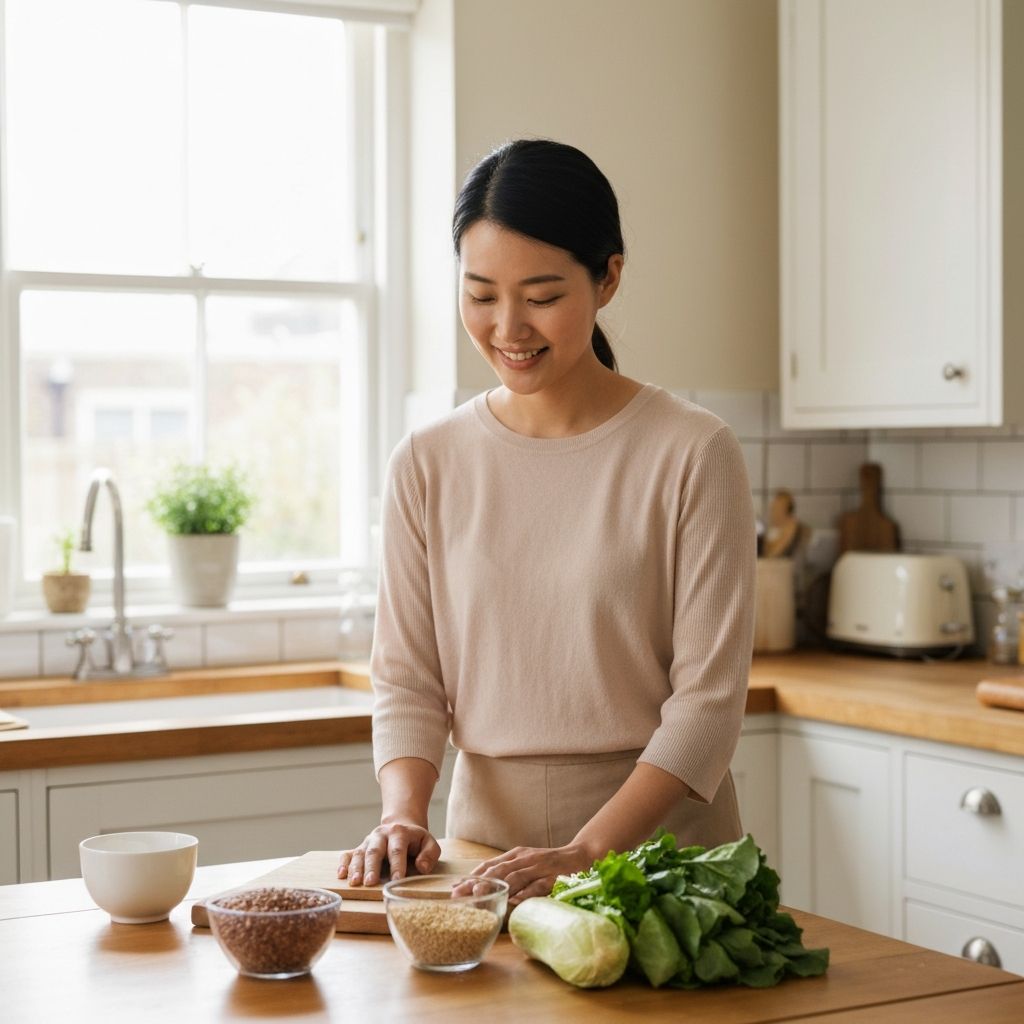
Planning a Simple Lunch
Monday morning. You're looking at your week—meetings, errands, a late finish on Wednesday. Rather than a generic meal plan, you and your nutritionist have talked through what lunch realistically looks like for you. Simple, portable, satisfying. Today, it's roasted vegetables with couscous and a thermos of soup. Next week, it might shift. The principle stays: what works for your actual life.
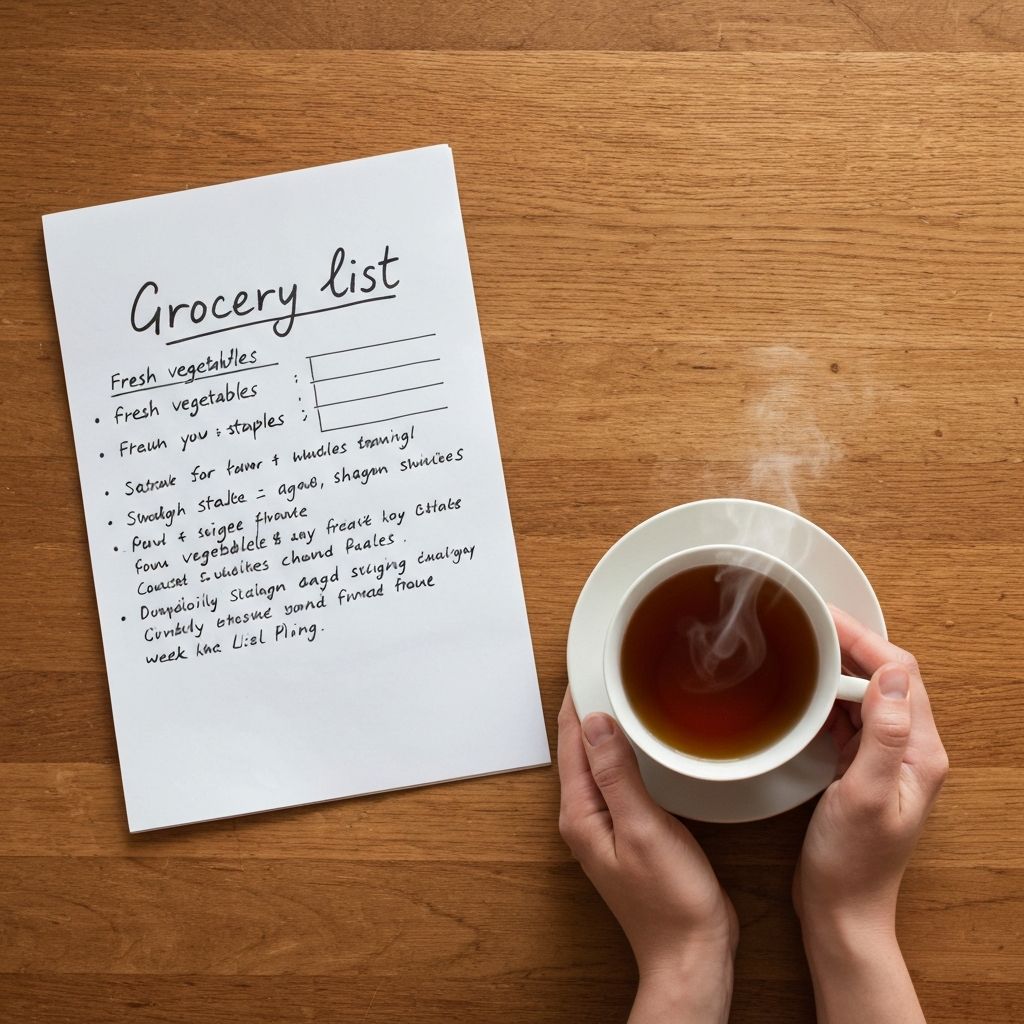
Writing a Grocery List with Tea
Thursday evening. You sit down with a cup of tea and your notebook. You've learned that a thoughtful list—built around pantry staples you already enjoy—makes shopping calmer. No exotic ingredients, no pressure. Just the foods that support your week. Your nutritionist helped you identify these basics. Now it's habit.
Choosing in a Supermarket Aisle
Saturday shopping. You move through the supermarket differently than you used to. You know what to look for. You understand the difference between marketing and nutrition. You make choices that feel aligned with what you've discussed, without anxiety or overthinking. Sometimes you choose the premium option; sometimes the budget option. Both are fine.

Sharing an Evening Meal
Friday night. Dinner is simple: something you've cooked, shared with people you care about. It's not about restriction or performance. It's nourishment, connection, and ease. Your nutritionist understands that food happens in social contexts. The work you do together supports that, rather than complicating it.

A Gentle Walk After Work
Wednesday afternoon. Work finishes, and you step outside for a quiet walk. Movement, fresh air, a moment to think. Your nutritionist knows that food work isn't separate from the rest of your life. How you live—how you move, rest, and manage stress—all connects to how you eat. The partnership supports your whole self.

Pantry Basics That Reduce Decision Fatigue
One of the most practical parts of working with a nutritionist is building a simple pantry. Not a restricted list—just clarity about what you're working with.
When you know your core ingredients, shopping becomes calmer. Meal decisions take less energy. You're not staring blankly at shelves wondering 'what now?' Instead, you have a familiar set of foods you understand and enjoy.
Here's what that might look like:
- Grains: Oats, rice, pasta, bread. Choose whole versions when they feel manageable.
- Proteins: Eggs, tinned beans, chicken, lentils, yogurt. Mix of quick and slower options.
- Vegetables: Onions, carrots, broccoli, tomatoes, peppers, leafy greens. Some fresh, some frozen.
- Fats: Olive oil, butter, nuts, seeds. Small amounts, used consciously.
- Flavourings: Salt, pepper, herbs, spices. These make simple food enjoyable.
- Store cupboard: Tinned tomatoes, stock, vinegar, honey. Essentials for quick meals.
The goal isn't perfection. It's knowing what you have, understanding why it's there, and feeling confident using it.
Tea-Break Habits and Midday Choices
These moments punctuate your day: mid-morning, lunchtime, the afternoon slump, evening wind-down. How you handle them shapes your whole day's eating.
Often, these are habit moments—times when you reach for something without conscious thought. The work here is gentle: becoming aware of the pattern, understanding what you need in that moment, and making a deliberate choice.
Sometimes what you need is truly food. Sometimes it's water, a walk, a moment of quiet. Your nutritionist helps you distinguish, and gradually build routines that actually serve you.
This isn't about cutting out tea-breaks or mid-day treats. It's about making them intentional and satisfying, rather than automatic and unfulfilling.
Portion Awareness Without Rules
Portion control is tricky to discuss. Too often, it becomes about rigid rules: 'eat exactly this much, measure everything.' But that's exhausting and disconnects you from your body's signals.
A better approach is awareness. Over time, through conversation and reflection, you notice what amounts of food leave you satisfied, energised, and without bloating or discomfort. Different meals, different situations—your needs shift.
Your nutritionist helps you develop a sense of this. Not through mathematics, but through observation and gentle experiment. 'How did you feel after that meal?' 'Did that amount work for you?' 'What would feel better next time?'
This builds genuine, sustainable awareness. You're not following external rules. You're learning to listen to yourself—which is far more reliable.
Roles in the Partnership
Partnership only works when both sides are clear about what they're bringing. Here's what that looks like.
What You Bring
- Your honest reality: how you actually eat, your schedule, your preferences
- Openness to conversation and reflection
- Willingness to try small experiments and report back
- Your own knowledge of what works for your body
- Commitment to the process, not perfection
What Your Nutritionist Brings
- Expertise in nutrition science and practical application
- Experience with how change actually happens
- Structure and accountability
- Adaptation when an approach isn't working
- Clear explanations, free of jargon
How Responsibility Stays Shared
- Recommendations are discussed, not imposed
- Changes happen at your pace, not the nutritionist's timeline
- If something isn't working, you say so—and you adapt together
- Progress is measured by what matters to you, not external standards
- The nutritionist supports; you decide
Questions to Reflect On
These questions are for you—to think through alone, or to bring into conversation with your nutritionist.
Noticing this is the first step. Once you see it, you can choose differently.
Not from diet culture, but from your life. What would feel sustainable?
Is it knowledge? Time? Confidence? Emotion? Different causes need different support.
Often it's not the biggest change. It's the one that feels possible.
Not for someone else. For you. Once you define it, you can work toward it.
About Holissx
Holissx is a nutrition-focused advisory platform that works in partnership with people through dialogue, adaptation, and steady support. We're grounded in the belief that genuine change happens through conversation, not instruction.
We don't promise transformation. We don't guarantee results. Instead, we offer a different approach: one built on understanding your life as it is, respecting your preferences, and supporting you toward habits that feel sustainable.
Our work is rooted in the principle that you know your body better than anyone else. Our role is to share expertise, ask good questions, listen carefully, and support you in building eating habits that serve your wellbeing—without extremes, without guilt, and with genuine partnership.
This is nutrition work as it can be: clear, grounded, human, and genuinely collaborative.
Get in Touch
Contact Information
Holissx Advisory
9 Piccadilly Circus
London W1J 0DA
United Kingdom
Phone: +44 20 9174 6385
Email: [email protected]